
Architectural Education at The RCA

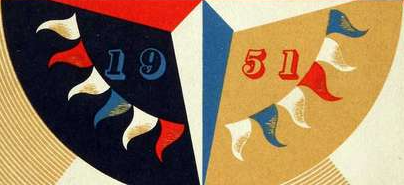
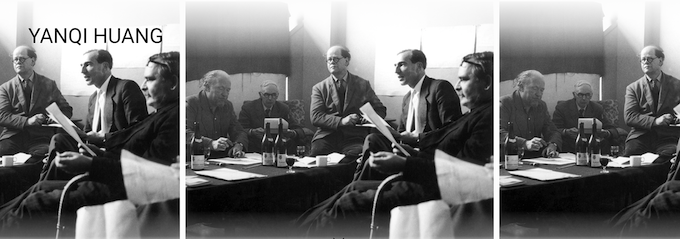
PhD student Yanqi Huang is working on an AHRC-funded project on the post-war history of architectural education at the Royal College of Art. He is keen to speak with people who studied or taught architecture (interior design, environmental design and architectural design) at the College between 1951 and 2003. He is also interested in hearing from anyone who has materials about the post-war College broadly – whether it’s lecture notes or objection letters to ‘Ellipse’ (2003) – or simply curious encounters with the Cadbury-Browns, the Cassons or the ‘Grunt Group’ (just to name a few).
Everything is welcome, just drop him an email at yanqi.huang@network.rca.ac.uk. You can read more about Yanqi's project here: Pedagogies, Professionalism and Practice.
Best wishes
Yanqi (he/him)
https://www.youtube.com/watch?v=GqRpKTOZ7sU
Comments
Keith New
Submitted by Jenni on Thu, 01/01/2026 - 14:14.
Keith New (1920-2012) Was a significant pioneering
British modernist stained glass artist in the 1950s and 1960s. This is the first monograph devoted to his work. It examines K. News' career in the first part, while the second part comprises a comprehensive catalogue of his stained glass.
K. News’ career was launched with the 1952 Royal College of Arts commission to design the nave windows for Basil Spence's Coventry Cathedral. The three-man team, led by Lawrence Lee, included Geoltrey clarke, another pioneer in the medium. Each artist designed three windows. The commission brought K. New to the attention of other prominent architects, including Robert Matthew and Denys Lasdun, as well as artists and critics like John Piper and John Betjeman.
Many commissions were to churches, either in post-war rebuilds or in medieval buildings. Alongside these are examples in significant public buildings as well as in schools. Altogether, there were 34 executed commissions, five of which have been wholly or partially lost. Through privileged access to the family archive, as well as research in record offices, the authors have drawn together a Catalogue Raisonné of his known designs, both executed and unrealised.
News short career in stained glass maps onto the excitement generated by the 1951 Festival of
Britain. When the post-war rebuilding programme finished in the mid-1960s. The demand for colourful and expensive stained glass also diminished.
Alternative directions led K. New to lead the Foundation
Studies at Kingston School of Art, and to return to painting, an activity that had always sustained him.
Art and Design Education in England and WWI / WWII
Submitted by Anonymous on Sun, 07/12/2025 - 15:17.
RCA was leading sub conscious approach in the world affairs during the World post Wars 1&2.
Unemployment and skilled work force shortage led governments towards educational institutions.
Artists designers lead peace organisations like AIA (Artist International Association).
And Journal of Art & Art Education. No: 2
And Journal of Art & Art Education. No: 11/12
http://www.and.org.uk/journal/